
SLIP/TRIP & FALL ACCIDENT
Essential Steps to Take Following a Slip/Trip and Fall Accident in California
Navigating the aftermath of a fall can be overwhelming. Taking the right initial steps is vital for both physical recovery and protecting future legal options.
Seek Immediate Medical Evaluation: Prioritize your health. Even if injuries seem minor, adrenaline can mask pain. A prompt medical assessment creates an official record that connects the incident directly to the injuries.
Report the Incident: Notify the property owner, manager, or supervisor immediately. Request a copy of the written incident report before leaving the premises, if possible.
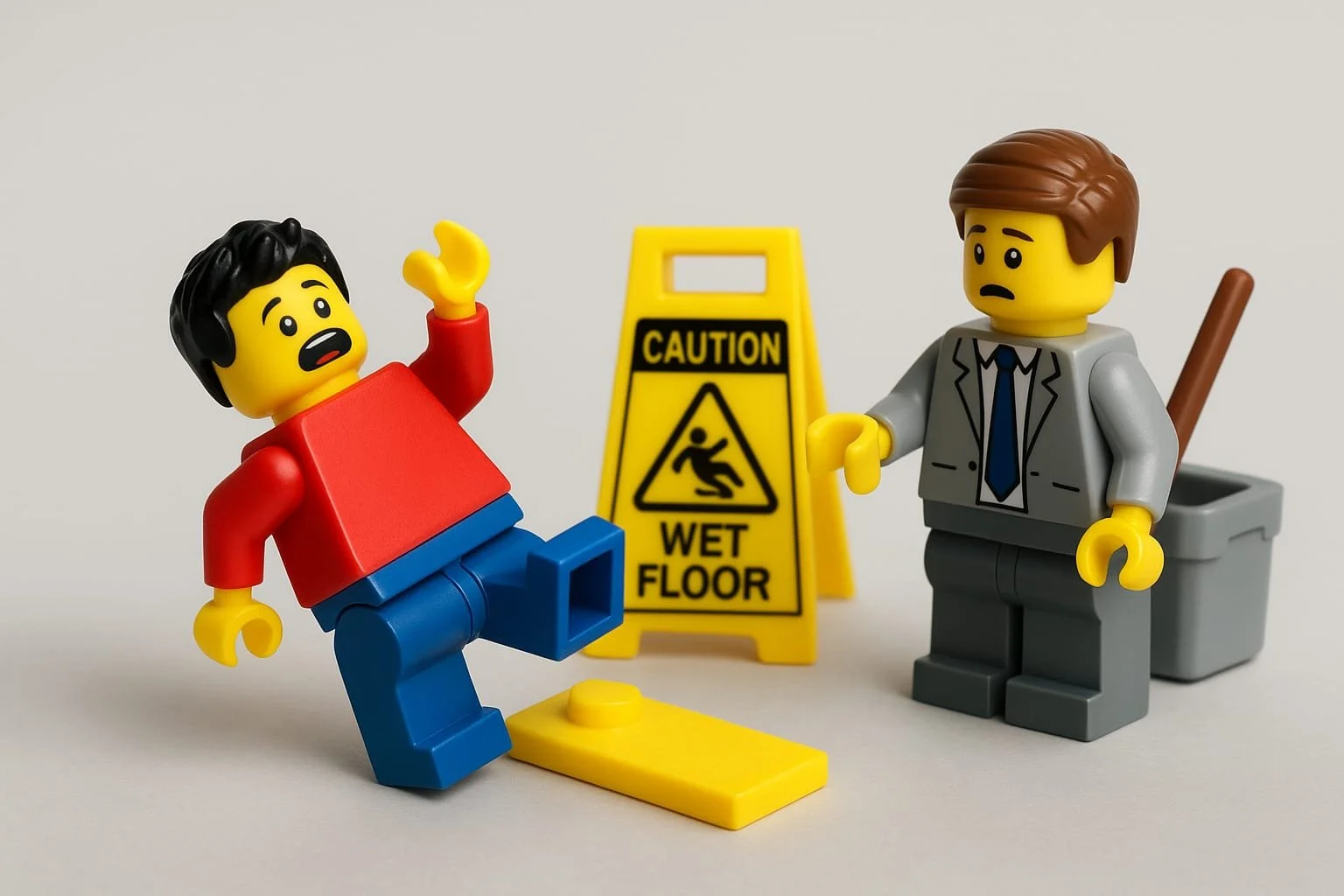
Document the Scene: If possible, take photographs of the specific hazard—such as a spill, uneven flooring, debris, or poor lighting. Capture the surrounding area to show the lack of warning signs. Keep in mind that sometimes warning signs are present but are inadequate considering the specific circumstances.
Identify Witnesses: Collect names and contact details from anyone who saw the fall or the conditions leading up to it. Witness statements are often pivotal in corroborating a claim.
Preserve Evidence: Keep the clothing and shoes worn during the accident. These items may contain tangible evidence of the hazard that caused the fall.
Avoid Quick Settlements: Do not accept an insurance settlement without first consulting a qualified California attorney.
Understanding Premises Liability and Negligence
A successful claim depends on demonstrating that a property owner failed to maintain a reasonably safe environment/condition. In legal terms, this is known as premises liability.
How Fault is Determined
To prove negligence, it must generally be shown that the property owner or occupant:
Created the dangerous condition;
Knew the hazard existed and failed to fix it; or
Should have reasonably known about the hazard through regular inspections.
The Role of Comparative Negligence
In many jurisdictions including California, comparative negligence laws apply. This means a recovery may be adjusted if the injured party is found partially at fault. Understanding these local nuances is essential for managing expectations during a claim.
Why Timing Matters: The Statute of Limitations
Every state has a strictly enforced statute of limitations for filing a personal injury claim. For instance, while many general claims allow up to two years, incidents occurring on government property often have much shorter deadlines—sometimes as little as six months. Taking timely legal action ensures that rights are protected before these windows close.
How an Attorney Navigates These Complexities
A skilled attorney handles the heavy lifting by investigating the accident, negotiating with insurance adjusters who often seek to minimize payouts, and calculating the full extent of damages—including medical bills, past and future lost wages, future medical care, and pain and suffering.
At Doust Law, we specialize in personal injury claims involving slip and fall accidents. Contact us promptly to discuss your case and protect your legal rights.
Timely legal action is important due to statutes of limitations. Contact us promptly to ensure your claim is protected and your best interests are represented.
Frequently Asked Questions
-
The presence of a sign does not automatically disqualify a claim. It will be evaluated whether the warning was adequate, visible, and placed in a location that truly mitigated the hazard. If the warning was insufficient for the specific circumstances, the property owner may still be held liable for negligence.
-
Under the theory of constructive notice, it can be proved that a hazard existed for a sufficient length of time that a reasonable owner conducting regular inspections should have discovered and repaired it. This is often established by analyzing maintenance logs and sweep sheets provided during the discovery phase.
-
Yes. Premises liability applies to private homeowners and renters as well as commercial businesses. Most homeowners' insurance policies provide coverage for injuries sustained by guests due to dangerous conditions on the property.
-
Under the statute of limitations, you generally have two years from the date of the accident to file a lawsuit. However, if the fall occurred on government property (such as a public sidewalk or city building), a formal claim must typically be filed within six months.
-
Restaurants have a heightened duty to maintain safe floors due to the frequent risk of spills and tracked-in debris. Liability in these cases is typically evaluated based on the following:
The "Reasonable Inspection" Rule: It will be determined if the restaurant staff followed a regular cleaning and inspection schedule. If a spill existed for an unreasonable amount of time without being addressed, the business may be held liable under premises liability.
Third-Party Negligence: In some cases, liability may extend to third-party cleaning companies or contractors if the floor was rendered dangerous due to improper waxing or maintenance.
Evidence Analysis: By evaluating the evidence —such as the restaurant’s internal "sweep logs," surveillance footage, and photographs of the hazard—a strategic case is built to prove the establishment had notice of the danger.
-
Yes, but these cases involve unique insurance layers. Liability for a fall at a vacation home is generally navigated through:
Host Liability Insurance: Most major platforms provide specialized liability insurance (such as Airbnb’s "Host Protection Insurance") that covers guests for injuries caused by a "dangerous condition" on the property.
Property Manager Responsibility: If the home is managed by a professional company, it will be determined if the injury resulted from a failure to inspect or maintain the premises between guest stays.
Statutory Compliance: Regardless of the platform's internal policies, California’s premises liability laws still apply. We analyze the evidence —such as photos of broken stairs, poor lighting, or loose rugs—to hold the responsible party accountable for negligence.
-
Liability for a hotel accident depends on where the fall occurred and whether the property was maintained according to California's safety standards. These claims are typically navigated through the following:
Public Area Maintenance: It will be evaluated whether the staff conducted regular "floor checks" and if any spills or hazards in lobbies or hallways were addressed within a reasonable timeframe.
Guest Room Hazards: Liability may also exist if an injury is caused by defective equipment, such as leaking appliances, loose carpeting, or malfunctioning bathroom fixtures.
Evidence Evaluation: By analyzing the evidence —such as hotel incident reports, photos of the hazard, and maintenance records—a case is built to prove the hotel had actual or constructive notice of the dangerous condition.
-
Evidence-Based Liability Analysis: We analyze the evidence provided—such as photographs of the hazard (spills, uneven flooring, or poor lighting), witness contact information, and surveillance footage—to document premises liability. We build a strategic case to prove the property owner had actual or constructive notice of the dangerous condition.
Medical Treatment Validation: We review the medical evaluations provided to connect your injuries directly to the incident. By documenting the extent of your physical recovery and any long-term impairments, we ensure the full scope of your personal injury is recognized.
Comparative Negligence Defense: Property owners often claim the victim was at fault. We evaluate the circumstances of the fall to counter arguments of comparative negligence, protecting your right to recovery even if the defense claims the hazard was "open and obvious."
Aggressive Insurance Negotiation: We manage all communications with insurance adjusters who often seek to minimize payouts. Our team calculates the full extent of damages, including medical bills, lost wages, and pain and suffering, to ensure a fair settlement is reached.
Zero Upfront Costs: You don’t pay us a dime unless we win your case. At Doust Law Our legal advocacy is provided on a contingency fee basis, meaning we only get paid if we successfully recover a settlement or verdict for you.
You can reach us anytime via our contact page or call us now at (424) 333-6220 to schedule your free case evaluation today.
