
MOTOR VEHICLE ACCIDENTS
What to Do After a Car Accident: A Step-by-Step Guide
If you have been involved in a motor vehicle collision in California, it is critical to take the following steps to protect your legal rights and ensure your physical safety:
Prioritize Safety and Move Vehicles: If possible, move your vehicle to a safe location or the shoulder of the road to avoid blocking traffic and preventing secondary accidents.
Check for Injuries Immediately: Carefully check yourself and any passengers for injuries before attempting to exit the vehicle.
Contact Law Enforcement: Call the police to report the incident. An official accident report is an important piece of evidence for any future personal injury claim.
Gather Critical Information and Evidence: Exchange contact details and insurance information with all other drivers. Be sure to collect names, phone numbers, driver’s license numbers, and insurance policy details. If possible, take clear photos of documents and license plates.
Document the Accident Scene: Use your phone to take photos or videos of vehicle damage, road conditions, traffic signs, and any visible injuries. Record the specific date, time, and location.
Protect Your Legal Rights: Avoid admitting fault or apologizing at the scene. Stick strictly to the facts when speaking with police and other parties to prevent statements from being used against you later.
Seek Medical Attention Promptly: Even if you feel fine, schedule a medical exam. Many auto accident injuries, such as whiplash, may not be immediately apparent.
Consult a Personal Injury Attorney: Contact an experienced car accident lawyer for a free consultation. A legal professional can help you navigate insurance negotiations and ensure you receive the compensation you deserve.

Car Accident
What to Do After a Commercial Truck Accident: Essential Steps
Being involved in a commercial vehicle crash involving a big rig or semi-truck in California is a traumatic experience that requires immediate and specific actions to protect your health and your legal right to maximum compensation.
Prioritize Safety and Secure the Scene: If possible, move your vehicle to a safe place or to the shoulder of the road to prevent secondary traffic accidents. Turn on your hazard lights and remain in a safe location until emergency responders arrive.
Request Immediate Medical Assistance: Call 911 immediately. Injuries from tractor-trailer accidents are often severe and may not be fully apparent due to adrenaline. A formal medical record is a cornerstone of any successful personal injury claim.
Involve Law Enforcement: Ensure the police file an official accident report. This document serves as an objective record of the incident, which is critical for establishing liability in trucking accident litigation.
Gather Critical Evidence at the Scene: Collect the truck driver's commercial driver’s license (CDL) number, their employer's name, and the trucking company’s insurance policy details. If safe, take photos of the vehicle damage, license plates, and any visible road hazards or skid marks.
Identify Witnesses: Gather names and contact information from anyone who witnessed the collision. Independent testimony can be a crucial factor in complex motor vehicle accident cases.
Protect Your Rights—Avoid Statements: Do not apologize or admit fault to the truck driver at the scene. Stick strictly to the facts when speaking with police and other parties at the scene; otherwise your statements can be used by insurance adjusters to reduce your settlement.
Consult an experienced Truck Accident Lawyer: Truck accident cases can be complex due to commercial trucking regulations and multiple liable parties. Navigating federal trucking regulations (FMCSA) requires specialized expertise. Schedule a free consultation with an experienced attorney to investigate the driver’s logs and the trucking company’s safety records to ensure you receive the compensation you deserve for medical bills, past and future lost wages, future medical care, pain and suffering, and other related damages.
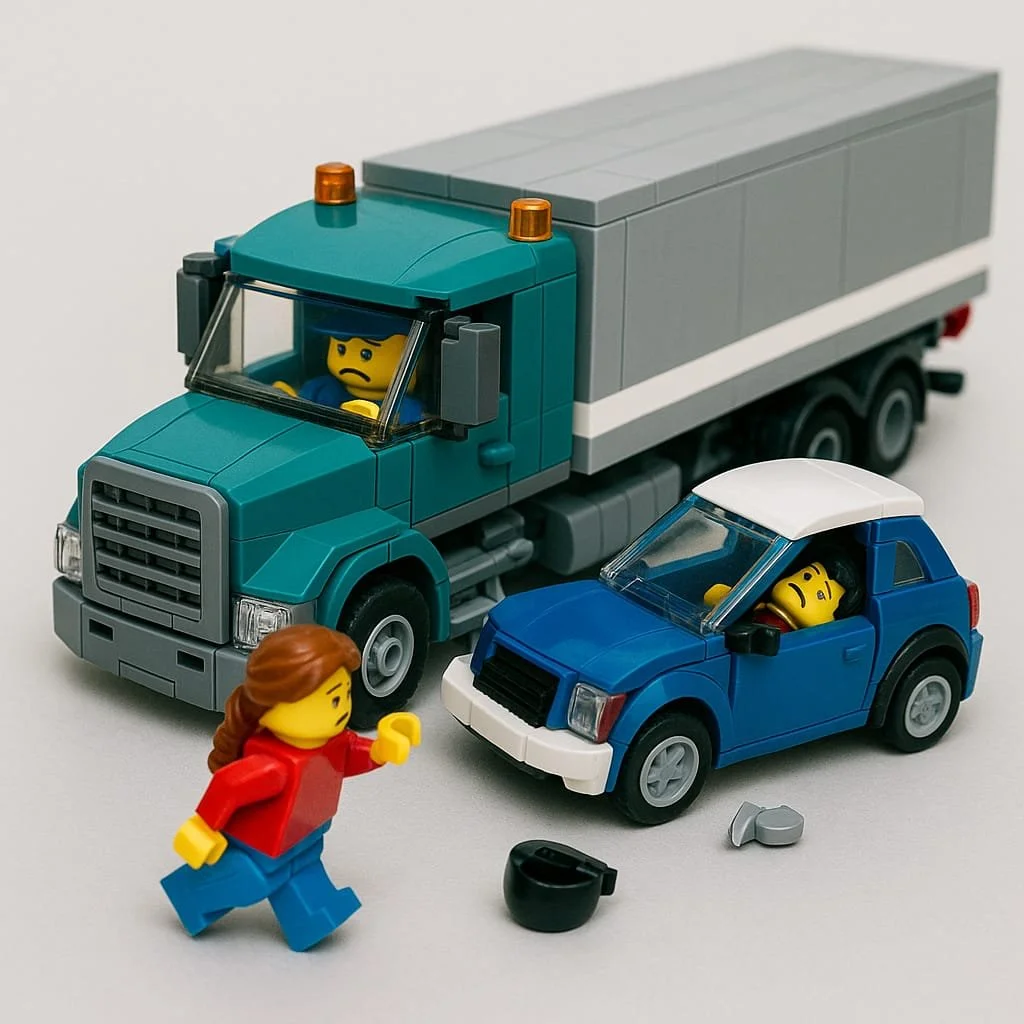
Truck Accident
What to Do After an Uber or Lyft Accident: A Guide to Rideshare Claims
If you have been involved in a rideshare accident as a passenger, driver, or third party in California, taking immediate and strategic action is essential to protecting your health and your legal right to maximum compensation.
Prioritize Safety and Move Vehicles: If your vehicles are blocking traffic, move them to a safe location or the shoulder of the road to prevent secondary collisions.
Check for Injuries and Seek Medical Care: Carefully check yourself and any passengers for injuries. Even if your pain seems minor, seek medical evaluation immediately; documentation from a doctor is the cornerstone of any successful personal injury claim.
Document Critical Evidence at the Scene:
Capture Photos/Videos: Take clear pictures of all vehicles involved, the accident scene, road conditions, and any visible injuries.
Collect Contact Details: Gather names and phone numbers from the rideshare driver, other motorists, and any witnesses.
Preserve App Data: Take a screenshot of your ride details in the Uber or Lyft app, including the driver’s name and the trip status at the time of the crash.
Involve Law Enforcement: Call the police to report the incident. An official accident report provides objective evidence that is vital when negotiating with insurance companies.
Protect Your Legal Rights: Avoid admitting fault or apologizing at the scene. Stick strictly to the facts when speaking with police and other parties to prevent statements from being used against you later.
Understand Rideshare Insurance Coverage: Uber and Lyft provide liability insurance policies to cover accidents involving their drivers, but coverage varies depending on the driver's status. Liability in an Uber or Lyft accident is tiered based on the driver's status in the app:
App Off: The driver’s personal insurance is the primary coverage.
Waiting for Request: Limited liability coverage applies (typically up to $50,000 per person/$100,000 per accident/$25,000 property damage per accident).
En Route or During Trip: Full $1 million primary liability policy is generally active for passengers and third parties.
Avoid Recorded Statements Without Legal Advice: Insurance adjusters often seek early statements to minimize their liability. Consult a lawyer before speaking to them to ensure your rights are protected.
Consult an Experienced Rideshare Accident Lawyer: Complex liability issues and multiple insurance policies make these cases challenging. An attorney can determine which policies apply and negotiate the settlement you deserve for medical bills, past and future lost wages, future medical care, pain and suffering, and other related damages.

Uber/Lyft Accident
What to Do After a Bus Accident: Protecting Your Rights
If you have been involved in a commercial or public bus accident in California, taking immediate and careful steps is vital to protect your well-being and your right to maximum compensation.
Prioritize Safety and Relocate: If vehicles are blocking traffic, move them to a safe location or the shoulder of the road to avoid secondary collisions.
Check for Injuries Immediately: Get to a safe place and check yourself and any other passengers for injuries. Your health is the top priority.
Contact Local Authorities: Report the crash to the police. An official accident report is critical evidence for establishing liability in personal injury claims.
Document the Scene and Collect Evidence: Take photos of the bus, all vehicle damage, road conditions, and your injuries. Gather contact details from the bus driver, other motorists, and all witnesses.
Avoid Admitting Fault: Do not make statements at the scene that imply responsibility. Stick strictly to the facts when speaking with law enforcement or others at the scene.
Seek Medical Attention Promptly: Even if you feel fine, schedule a medical evaluation. Symptoms of motor vehicle injuries often appear hours or days later.
Understand Passenger Rights: If you were a passenger injured in a bus collision, you may have a legal claim against the bus driver, the operating company, or other involved motorists.
Identify Government Liability: Many bus accidents involve public transit. In these cases, you may have a claim against a government entity, which requires filing a specialized government claim within a very limited timeframe.
Consult an Experienced Bus Accident Lawyer: Navigating claims against large transit companies or government agencies is complex. Contact a legal professional for a free consultation to ensure you meet all deadlines and secure compensation for medical bills, past and future lost wages, future medical care, pain and suffering, and other related damages.
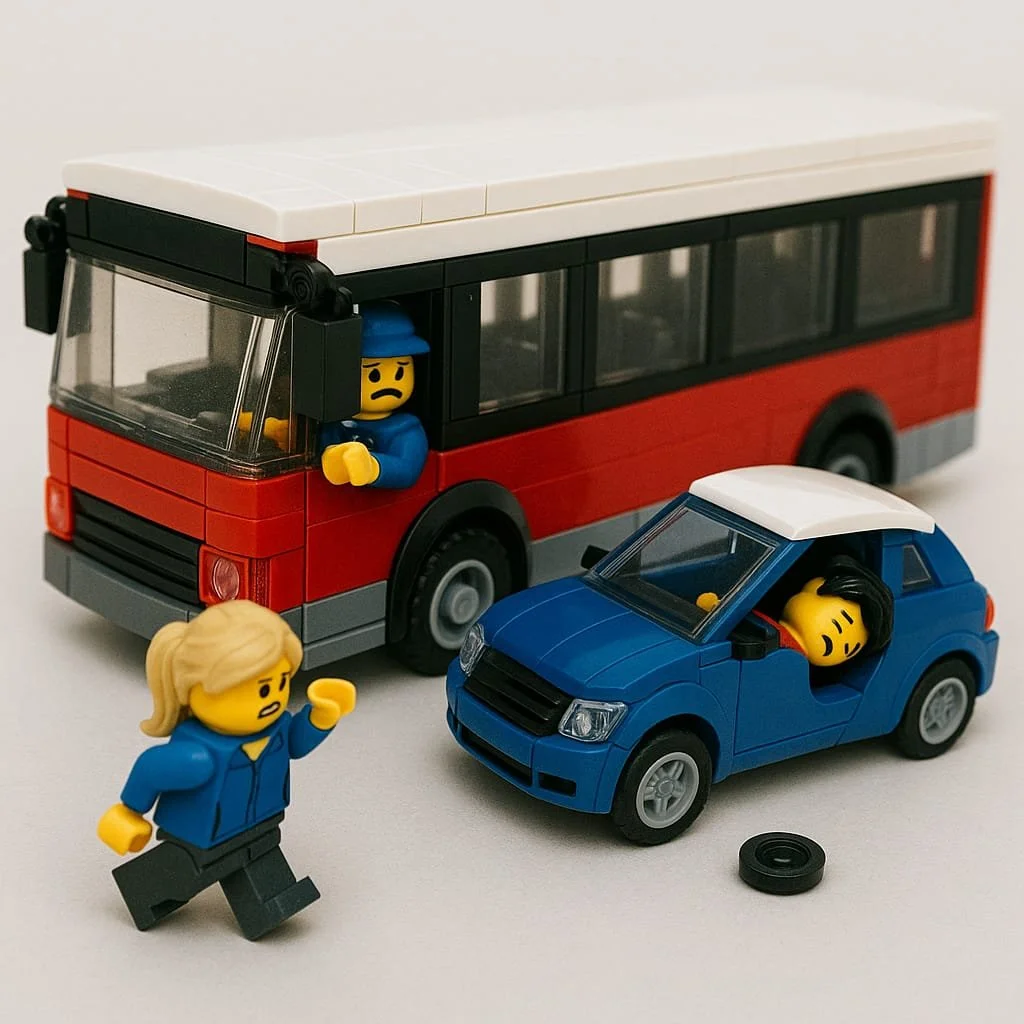
Bus Accident
What to Do After a Motorcycle Accident: Essential Steps for Riders
If you have been involved in a motorcycle crash in California, taking immediate and strategic action is vital to protect your safety and your legal right to maximum compensation.
Move to a Safe Location: If your motorcycle or other vehicles are blocking traffic, move them to the shoulder or a safe area to prevent secondary collisions.
Check for Immediate Injuries: Carefully evaluate yourself and any passengers for injuries. Motorcycle riders are particularly vulnerable, so prioritize your physical health before attempting any other tasks.
Report the Incident to Law Enforcement: Contact the police to file an official motorcycle accident report. This document is a critical piece of evidence for any future personal injury claim.
Gather Scene Evidence and Contact Info: Take high-quality photos of the accident scene, including your motorcycle, all other vehicles involved, road hazards, and your injuries. Collect contact and insurance details from all drivers and any witnesses.
Protect Your Rights—Avoid Admitting Fault: Do not apologize or make statements at the scene that could be interpreted as an admission of responsibility. Stick to the facts when speaking with law enforcement and others at the scene.
Seek Comprehensive Medical Attention: Even if you feel fine, schedule a medical evaluation. Many serious motorcycle accident injuries, such as internal damage or concussions, may not be immediately apparent due to adrenaline.
Consult a Specialized Motorcycle Accident Attorney: Navigating insurance claims for riders can be difficult due to common biases. An experienced lawyer can handle negotiations and protect your legal rights to ensure you receive a fair settlement for medical bills, past and future lost wages, future medical care, pain and suffering, and other related damages. Schedule a free consultation today.
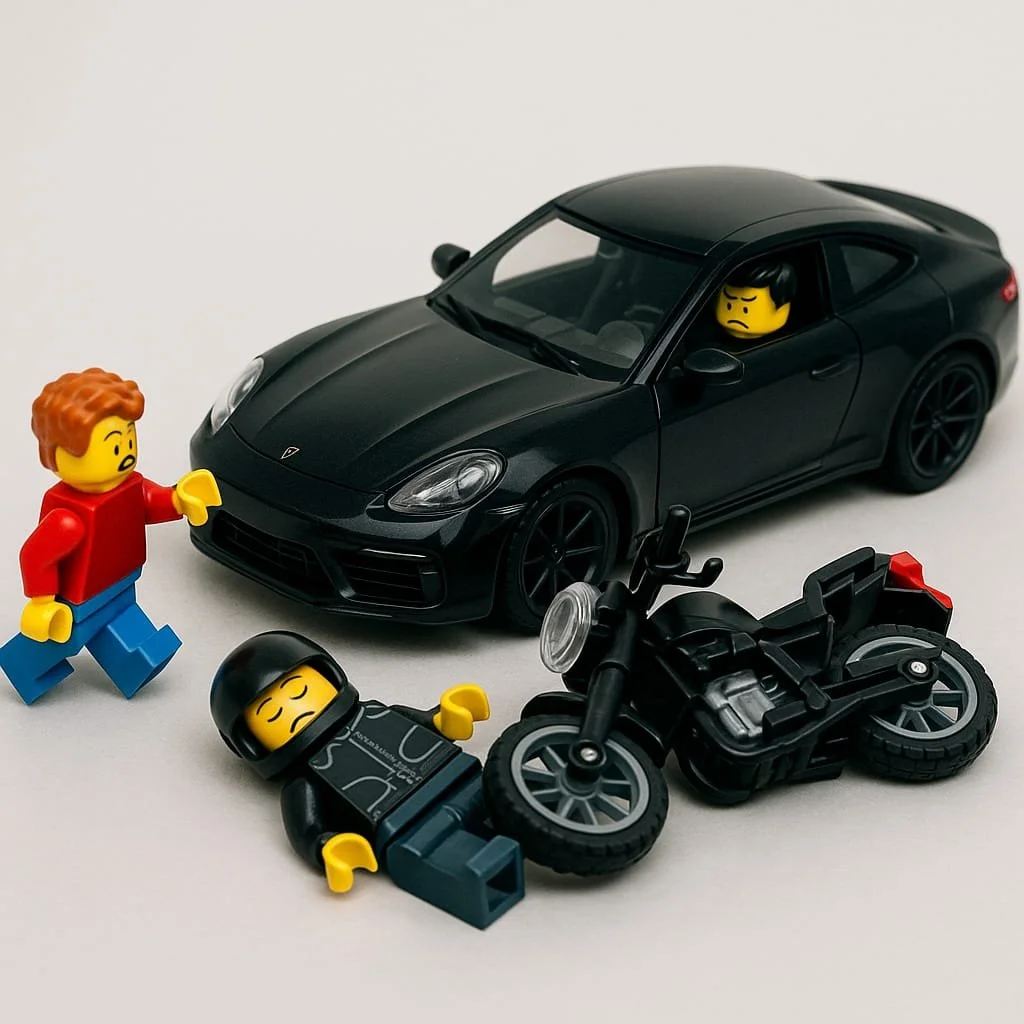
Motorcycle Accident
What to Do After an Uninsured or Underinsured Motorist Accident
If you are involved in a motor vehicle accident in California where the at-fault driver is uninsured or lacks sufficient insurance, you still have legal pathways to recover compensation for your injuries and damages. Follow these critical steps to protect your claim:
Understand UM/UIM Coverage Options:
Uninsured Motorist Coverage (UM): This protects you if the at-fault driver has no insurance or if you are the victim of a hit-and-run.
Underinsured Motorist Coverage (UIM): This covers the gap when the at-fault driver’s liability limits are too low to fully compensate for your medical bills and related damages.
Preserve Critical Evidence Immediately: Document the accident scene by taking photos of all vehicle damage, road conditions, and your injuries. Obtain witness contact information and the insurance details of all other vehicles involved; this evidence is vital for proving the extent of liability and securing a fair settlement.
Verify Your Insurance Policy Limits: Review your current auto insurance policy to determine your specific coverage limits, deductibles, and required claim procedures for uninsured motorist claims.
Explore Alternative Sources of Recovery: If your UM/UIM coverage is insufficient, an attorney can help you explore other avenues, such as medical payments coverage (MedPay), personal health insurance, or pursuing a lawsuit directly against the at-fault driver’s assets.
Seek Specialized Legal Advice: Navigating a claim against your own insurance company can be adversarial and complex. Contact an experienced personal injury attorney for a free consultation to ensure you maximize your compensation and protect your legal rights throughout the process.
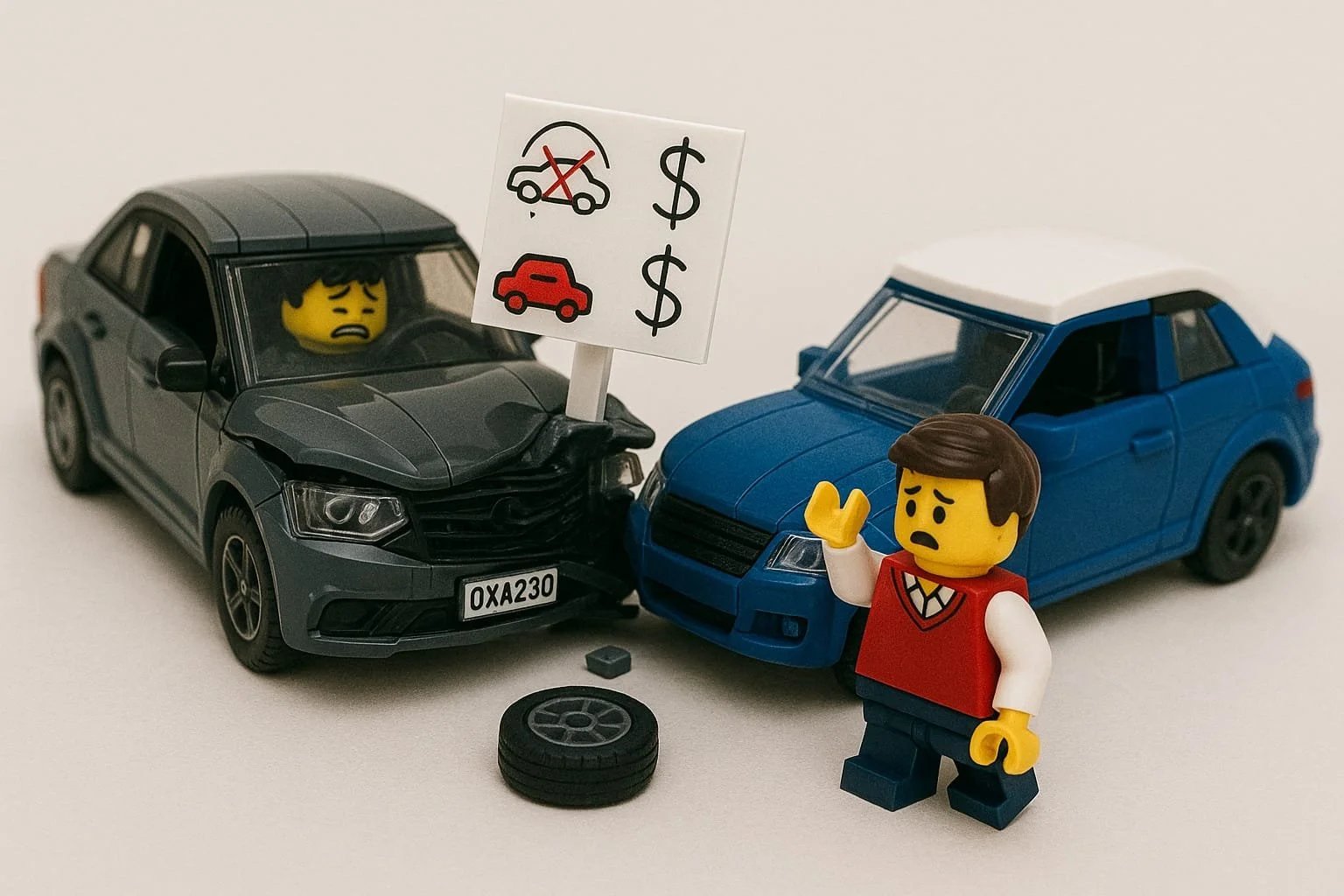
Uninsured or Underinsured Motorist Accident
Consult with an Experienced Los Angeles Accident Attorney at Doust Law
If you or a loved one has been injured in California, navigating the legal aftermath can be overwhelming, but you do not have to face it alone. At Doust Law, we provide expert legal representation for complex motor vehicle accident cases, offering dedicated support through every phase of your physical and financial recovery. Our mission is to protect your interests and fight for the maximum compensation you deserve for medical bills, past and future lost wages, future medical care, pain and suffering, and other related damages.
Because the statute of limitations makes time a critical factor in California personal injury litigation, delaying your claim could impact your ability to recover a fair settlement. Don't leave your future to chance—partner with a Los Angeles law firm that understands the intricacies of state insurance laws and victim rights.
Take the first step toward justice today. Contact Doust Law for a comprehensive free consultation to discuss your situation in detail and ensure your legal rights are fully protected.

Frequently Asked Questions
-
Generally, the statute of limitations for filing a personal injury claim in California is two years from the date of the accident. However, if your case involves government liability (such as a public transit bus accident), the deadline to file a formal claim can be as short as six months.
-
The value of your claim depends on several factors, including the severity of your injuries, the total of your medical bills, and lost wages. At Doust Law, we fight for maximum compensation covering both economic and non-economic damages, such as pain and suffering. Whether it is a car accident or a complex truck accident, we help you calculate the full impact on your future.
-
California follows a pure comparative negligence rule. This means you can still recover compensation even if you were partially responsible for the collision. Your final settlement will simply be reduced by your percentage of fault. For example, if you were involved in a motorcycle accident and were found 20% at fault, you could still recover 80% of the total damages.
-
No. We operate on a contingency fee basis, which means there are no upfront costs. You only pay us if we successfully recover money for you. This allows you to focus on your recovery while we handle the legal investigation. You can contact us today for a completely free consultation.
-
Liability in a rideshare accident depends on the driver’s status in the app. If the driver was "on the clock" and transporting a passenger, a commercial liability policy typically applies. However, if the app was off, the driver’s personal insurance is primary. Navigating an Uber or Lyft accident claim requires identifying which policy was active at the exact moment of the crash.
-
If you are a victim of a hit-and-run or the at-fault driver is uninsured, you can seek recovery through your own Uninsured Motorist (UM) coverage. This allows you to collect compensation for medical bills and damages directly from your insurance provider. At Doust Law, we specialize in uninsured motorist claims to ensure our clients aren't left paying for an accident they didn't cause.
-
Yes, but claims involving government liability have much stricter rules. If you were injured as a passenger on a public bus (like LA Metro), or if a public bus struck your car and caused the accident, you must file a formal administrative claim with the government entity within six months. Failing to meet this deadline can permanently bar you from recovery. Our firm understands the complexities of bus accident litigation and ensures all government filing requirements are met.
-
Underinsured Motorist (UIM) coverage is designed to protect you when the at-fault driver has insurance, but their policy isn't enough to pay for your total medical bills and related damages. In California, your UIM benefits apply only if your own UIM policy limits are greater than the at-fault driver's liability limits.
Essentially, your UIM coverage "fills the gap" between their low coverage and your actual damages. For instance, if a driver carries the 2026 California minimum of $30,000, but your case is worth $100,000, your underinsured motorist claim can cover the remaining $70,000—as long as your UIM limit is at least $100,000. Keep in mind that you typically must recover the full amount of the at-fault party's policy before your own UIM coverage takes effect
-
If you are an Uber or Lyft driver and another motorist is at fault but has no insurance, you are protected by the rideshare company’s commercial uninsured motorist (UM) policy—provided you were "on the clock". While these rideshare companies typically offer $1 million in third party liability protection, recent changes in California law for 2026 have significantly altered the available coverage for uninsured motorist claims. At Doust Law, we investigate these commercial policies to ensure you receive the full benefits available for your medical bills and related damages.
